

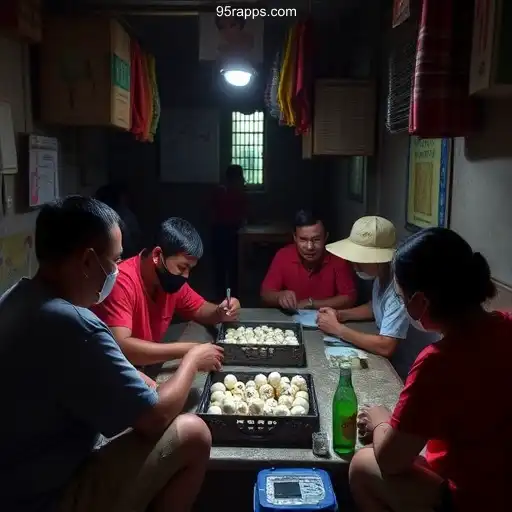
Understanding Jueteng: The Intricacies of An Age-Old Numbers Game in the Philippines
Jueteng, an illegal numbers game, has persisted in the Philippines for over a century, becoming woven into the cultural and socio-political fabric of the nation. Despite its illegal status, Jueteng remains widespread across the country, largely due to its strong roots in communities and the economic incentives it provides for both operators and patrons.
A Brief History of Jueteng
Originating during the Spanish colonial period, Jueteng has evolved into a popular grassroots gambling activity. Historically, it was introduced by Chinese traders and quickly assimilated into Filipino culture. The name ‘Jueteng’ is derived from the Chinese word ‘hue-teh’, which refers to a flower gamble.
Over the years, Jueteng has been intertwined with political dynamics in the country. Its operators, known as ‘kubradors’, have influenced local politics either by mobilizing communities or by allegedly funding political campaigns. Despite numerous government crackdowns, Jueteng has proven resilient, adapting to socio-political changes and finding new ways to continue its operations.
How Jueteng Works
Jueteng is relatively straightforward. A bettor picks a combination of numbers, usually between 1 and 37, and places a bet on the outcome. The draw is conducted by spinning two sets of numbered balls, each set corresponding to a chosen combination by the bettor. If the bettor’s number matches the drawn combination, they win a cash prize that can be significantly higher than their initial bet.
Despite its simplicity, Jueteng operates on a sophisticated network involving collectors, ‘kobrador’, coordinators, and even protection from officials, allegedly, to ensure smooth operations. Bets are collected daily in communities, with drawings often conducted in secret locations to avoid legal repercussions.
The Socio-Economic Impact of Jueteng
Jueteng has a substantial socio-economic impact, especially in rural and urban areas where economic opportunities are limited. For some, it’s not just a game but a source of livelihood. The kubradors earn commissions from collected bets, providing financial means for their families.
Additionally, Jueteng revenue sometimes trickles back into communities through informal channels, allegedly funding local projects and providing financial support during emergencies. This cyclical flow of money adds a layer of complexity to government efforts aiming to eradicate the practice.
Legal and Political Challenges
The Philippine government has a long history of attempting to curb Jueteng, given its illegal status. However, these efforts are often met with limited success due to the game’s entrenched socio-political connections. Crackdowns lead to a temporary reduction in activity but fail to eliminate the roots of the problem entirely.
The relationship between Jueteng operators and political figures often muddies the waters in eradicating the game. Allegations of corruption and collusion are common, leading to a lack of trust and effectiveness in government interventions. Efforts to legalize and regulate gambling have also sparked controversial debates, reflecting the complex dynamics at play.
Jueteng's Cultural Resonance
Despite its illegal status, Jueteng holds cultural significance in the Philippines. It is often seen as a form of communal activity, bringing people together and providing a sense of belonging in communities. Stories of individuals winning big or using winnings for essential needs resonate with many and reinforce the game’s allure.
This cultural resonance makes Jueteng distinct from other forms of gambling such as online games which are gaining popularity. In recent years, online gaming platforms like “95R Descubra o Melhor dos Jogos Online Brasileiros Hoje Mesmo♥️” have offered a legal and digital alternative to traditional gambling methods, capturing the attention of the younger, tech-savvy population.
Comparative Insights: Jueteng vs. Modern Online Gaming
While Jueteng’s impact is predominantly local, the rise of online gaming platforms reflects broader trends in globalization and digitalization. Platforms such as “95R Descubra o Melhor dos Jogos Online Brasileiros Hoje Mesmo♥️” offer broader accessibility, strict regulation, and legal frameworks, which contrast with Jueteng’s clandestine and community-driven nature.
The appeal of online gaming lies in its convenience and the diverse options available to players. Moreover, it enables players to engage in a regulated environment, providing certain protections against traditional gambling-related risks. This modernization in gaming presents a challenge for Jueteng’s prevalence but leaves the question of cultural preservation and economic impact open for discussion.
Conclusion
Jueteng, deeply rooted in Philippine society, demonstrates the complexity of balancing legal frameworks and cultural practices. Its significant cultural and economic role makes it a profound subject of study, reflecting broader socio-political and economic dynamics unique to the region. As modern gaming platforms continue to rise, the future of Jueteng remains uncertain but undeniably significant.